
Cross street Building photos for September
September 9, 2026
Building Committee Update
September 20, 2026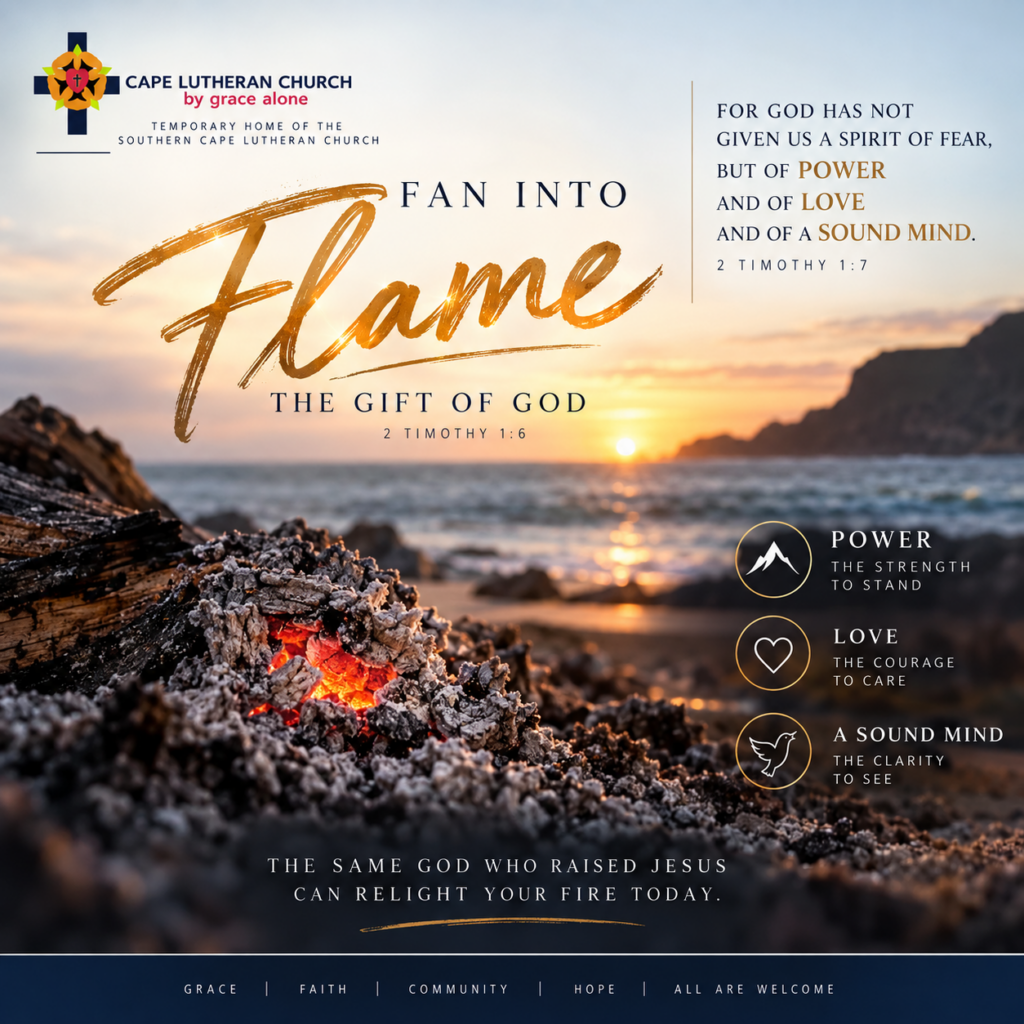
In 1997, sociologist Frank Furedi published a book titled The Culture of
Fear. His primary insight was that fear has become the dominant language
through which the Western world interprets reality.
Nearly a decade later, in 2006, Zygmunt Bauman published Liquid Fear. He
observed that civilization—the orderly world in which we live—is remarkably
frail. We are, as he put it, skating on thin ice. We live under the persistent
dread of collective disaster, in a world where media and politicians frequently
weaponize fear to control populations and achieve specific goals.
One of my favorite theologians, Walter Brueggemann, wrote in his 19 theses
that every single one of us is shaped by the dominant culture around us. And if
fear is the dominant culture, then even as we sit here this morning, fear sits
just beneath the surface of our lives.
Fear changes us.
It forces us to live smaller, diminished lives.
It holds us back.
It keeps us silent when we ought to speak.
It drives us to choose safety over courage.
B. STEPPING BACK 2,000 YEARS
To understand how to navigate this, let us step back two thousand years.
The Apostle Paul is writing from a cold Roman prison cell, acutely aware
that his earthly life is drawing to a close. His spiritual son, Timothy—a young
leader—carries a massive weight of responsibility in a deeply hostile
environment. The church in Ephesus is under threat, believers are suffering,
and opposition is rising on every side.
Somewhere between the divine calling Timothy received and the harsh reality
he faces every day, fear crept in.
And this is a reality we know all too well: where fear triumphs, the inner
fire begins to fade.
So Paul writes to him with urgent tenderness:
“For this reason I remind you to fan into flame the gift of God, which is
in you through the laying on of my hands...”
— 2 Timothy 1:6
On Friday evening, I had an experience with an unattended fire that
illustrated exactly what Paul meant.
The flames had gone out. The wood had turned black. All that remained was a
thick, cold layer of gray ash. But if you stir through those ashes with a
stick, something surprising often happens: deep beneath the ash, a small red
ember is still glowing.
Notice what Paul is saying. Timothy’s problem is not that God has abandoned
him. The problem is simply that the ashes have piled up.
This is a vital word for us today. There are seasons when you might look at
your life and think, "My faith is dead. My fire is gone." But perhaps
it isn't dead at all. Perhaps it is simply buried under a heavy layer of ash:
The ash of disappointment and unfulfilled hopes.
The ash of anxiety and physical exhaustion.
The ash of living in a world that feels increasingly unsafe and
unpredictable.
Paul does not offer Timothy a brand-new message or a complex set of steps.
He simply points him back to what is already there:
“For God has not given us a spirit of fear, but of power and of love and of
a sound mind.”
— 2 Timothy 1:7
C. WHAT THE SPIRIT SUPPLIES
It is interesting how often we hear Christians quote the first half of that
verse: "We have not been given a spirit of fear." And then they stop
right there.
But Paul doesn't linger on fear. He shifts his focus immediately to what
God does supply. He says we have been given a Spirit of three specific, divine
resources:
Power: Not world-dominating force, nor the illusion that we will never be
weak. Rather, it is the quiet strength to stand our ground when life grows
hard. True Christian power operates through paradox—it is perfected in
weakness. It gives us the courage to serve, to care, and to willingly lower
ourselves for the sake of our neighbor.
Love: Fear forces us inward. Fear asks: "What about me? Am I safe?
What will I lose?" Love turns our gaze outward. Love enables us to step up
and be present for someone else even while we ourselves feel afraid.
A Sound Mind (Self-Control): Fear exaggerates reality and makes our
circumstances look bigger than God. A sound mind restores spiritual
perspective, allowing us to evaluate reality through the clear lens of truth.
The Breath That Relights the Flame
Where do Timothy—and where do we—find the courage to step forward? Not from
within ourselves. Paul makes this wonderfully clear in verses 9–10:
“He has saved us and called us to a holy life—not because of anything we
have done but because of his own purpose and grace.”
The Gospel never begins with what we must do for God; it begins with what
God has already done for us.
We often fall into the trap of thinking our faith is a fire we must keep
burning through sheer human willpower. We imagine God standing over us saying:
"Try harder. Be stronger. Pray more. Stop being afraid."
But Paul points Timothy past his own performance, past his courage, and far
past his failures, back to the unmerited grace of God:
“This grace was given us in Christ Jesus before the beginning of time, but
it has now been revealed through the appearing of our Savior, Christ Jesus, who
has destroyed death and has brought life and immortality to light through the
gospel.”
— 2 Timothy 1:9b–10
This is the breath that relights the flame. Not the denial of our fear, but
the resurrection of Jesus Christ.
Jesus did not stand outside our darkness and shout empty words of
encouragement from a distance. He stepped directly into it. He entered death
itself, broke its power, and walked out of the tomb alive. Death no longer has
the final word over your life—Christ does.
And that is why I wrote on the front of your liturgy page today: We can
live with absolute boldness and endure any present hardship because THIS IS NOT
THE END!
D. CONCLUSION
If there is a thick layer of ash over your heart today, do not be quick to
conclude that your faith is dead.
You simply need to be reminded:
Reminded of your baptism.
Reminded of God’s unbreakable grace.
Reminded of the cross of Christ.
Reminded of the empty tomb.
Let the Spirit of God blow across the cold ashes of your life today.
Beneath them, the ember still glows—and the God who planted it there is
faithful to fan it into a brilliant flame once again.
Amen.